A Beginner’s Guide to Italian Poppy Seed Breads
Poppy seeds turn up in Italian baking without much fanfare. They dust the crust of a country loaf in the Veneto, disappear inside the dark spiral of a strudel in Alto Adige, and scatter across taralli on a Puglian table. None of it is grand. The seeds cost little, keep for months in a cool cupboard, and reward anyone willing to grind them, soak them in hot milk, or simply brush a proofed loaf with water and scatter them on top. What follows is a working introduction: the styles worth knowing, the small details that separate a good poppy seed bread from a dry and gritty one, and a realistic route into baking them in an ordinary home oven.
What the seeds actually do in a dough
Start with flavour. Blue-grey culinary poppy seeds taste faintly nutty and a little earthy, with a slight bitterness when eaten raw by the spoonful. Heat, fat and sugar soften that edge. In a lean bread dough they read as a background hum; in a filling they become the whole point of the bake — dark, dense and gently sweet.
Texture matters just as much. Whole seeds give crunch, which is why they suit crusts, crackers and taralli. Ground seeds give body. Grind them and they release oil and a faintly creamy richness that thickens a filling and keeps a slice moist for days. Most Italian bakers use both approaches in the same kitchen: whole seeds on the outside, ground seeds within.
Two kinds of seed reach the shops: small blue-grey seeds, standard across central and northern Europe, and paler golden seeds that taste milder. For Italian breads, the blue-grey ones are the reference. Buy them from a busy spice merchant or a bakery supplier and smell before you commit. Fresh seeds smell nutty and clean; stale ones smell of old paint and will taste of it too.
Sweet poppy seed breads: the filled tradition
Strudel and filled rolls
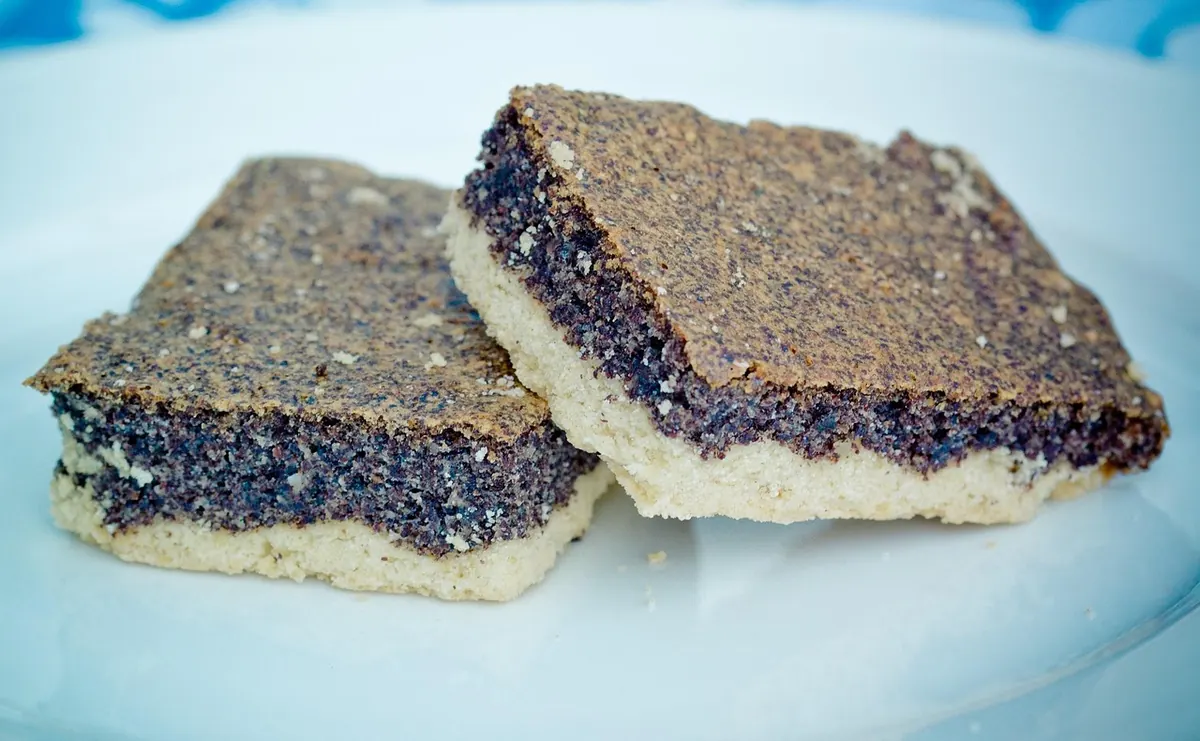
The northern borderlands are where poppy seed baking becomes serious. A strudel di semi di papavero follows the same logic as the apple version: a thin, elastic dough, a generous band of filling, a tight roll and a hot oven. The filling is the work. Grind the seeds, pour hot milk over them with sugar, butter, honey and lemon zest, then cook the mixture gently until it thickens enough to hold a spoon. Let it cool completely before spreading, or it will soak the dough and split the roll.
Smaller shapes follow the same filling: crescents, pockets and little yeast buns, sometimes with a spoonful of plum jam hidden in the centre. Raisins soaked in rum or warm apple juice are traditional and useful, since they add moisture as the bread cools.
Braids, ciambelle and everyday sweet loaves
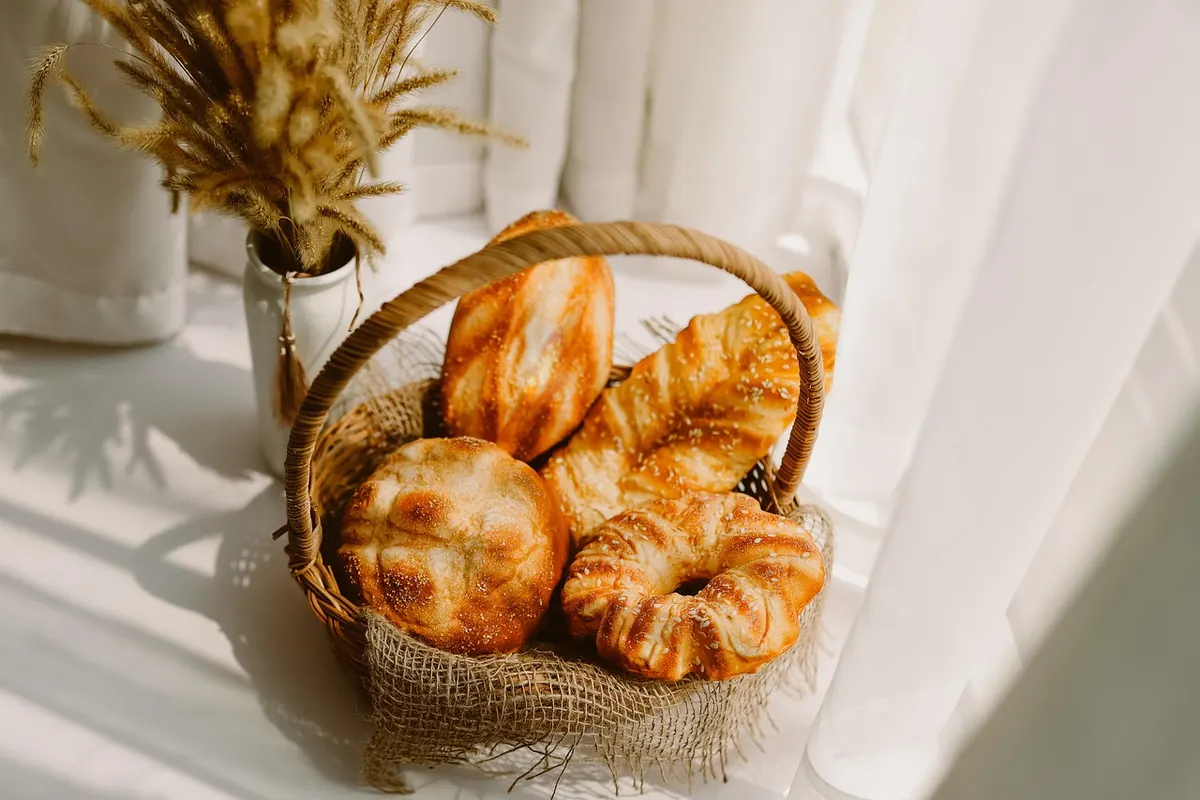
Further south, poppy seeds often appear as a accent rather than a filling: a sweet milk bread rolled with a thin layer of seed paste, braided, glazed and finished with a scatter of whole seeds. A ciambella made this way is forgiving, keeps well, and makes a good first project if you have never worked with an enriched dough. The ratio that works reliably is roughly 150 g of seeds for a filling built around 500 g of flour — enough to taste clearly, not so much that the crumb turns heavy.
Savory poppy seed breads: crust, crumb and crunch
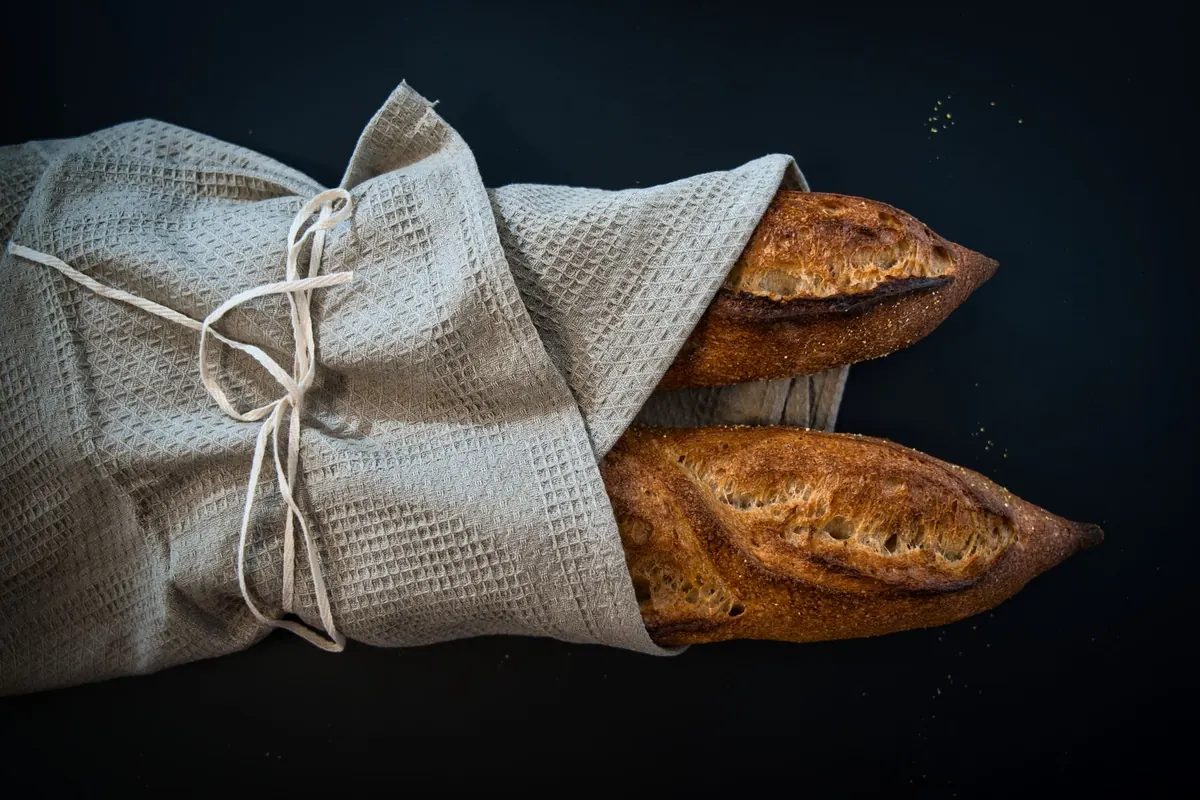
On the savoury side, restraint wins. A sourdough or a straightforward yeasted country loaf brushed with water and rolled in seeds gets a speckled, almost lacquered crust, and the seeds toast against the hot stone. Semolina or a little rye in the flour gives them something to grip. Add fennel seed and coarse salt and you have a loaf that belongs next to salami and pecorino.
Focaccia takes seeds well, pressed lightly into the dimples after the final proof and before the olive oil goes on. Taralli, the ring-shaped Puglian biscuits, are another natural home: seeds go into the dough along with olive oil and white wine, the rings are boiled briefly and then baked until they snap. Grissini and thin crackers follow the same principle. Keep the seed quantity modest — around 5 to 8 percent of the flour weight — so the dough still develops.
Buying, storing and preparing the seeds
- Buy small. A 250 g bag goes a long way; seeds go stale faster than most bakers expect.
- Store cold and dark. An airtight jar in the fridge, or the freezer for longer stretches, keeps the oils from turning.
- Grind for fillings. Pulse in a coffee grinder in short bursts. Stop before the seeds turn to paste — you want meal, not butter.
- Soak in hot milk. Ten minutes of steeping softens whole seeds and prevents the dry, sandy texture that spoils rushed fillings.
- Toast for crusts. A dry pan over medium heat for two or three minutes wakes up the aroma. Cool before using.
- Buy culinary grade. Seeds sold for planting may be treated and are not meant for the table.
A first bake: sweet poppy seed braid
This is a forgiving enriched dough that teaches the whole process in one afternoon.
- Make the filling first: grind 150 g seeds, simmer 250 ml whole milk with 70 g sugar, 30 g butter and a spoonful of honey, stir in the seeds and cook for five to eight minutes until thick. Off the heat, add lemon zest and a handful of soaked raisins. Cool fully.
- Mix 500 g strong white flour, 80 g sugar, 8 g salt and 7 g instant yeast. Add two eggs plus milk to reach about 300 g of liquid, then knead in 100 g soft butter a little at a time.
- Knead for ten minutes, until smooth and only slightly tacky. Bulk ferment for 60 to 90 minutes, until doubled.
- Roll the dough to a rectangle about 30 by 40 cm. Spread the filling, leaving a 3 cm border.
- Roll up from the long side, seal the seam, then cut the roll in half lengthways and twist the two strands together. Tuck the ends under.
- Proof seam-side down for 45 to 60 minutes. Brush with egg and scatter whole seeds over the top.
- Bake at 180°C for 35 to 40 minutes, tenting with foil after 25 minutes if the top darkens too quickly. Cool before slicing.
Shaping, proofing and the mistakes that show up most
Filled doughs leak. Leave that border, seal the seam firmly, and proof with the seam underneath so gravity helps you. An enriched dough with a heavy filling will take longer to rise than you expect, so judge by feel rather than the clock — a gentle poke should spring back slowly and incompletely. Bake until the internal crumb is set; if the loaf sounds hollow and the filling bubbles at the ends, it is close.
If a filling turns out dry, the cause is usually too little milk or butter, or seeds that were never ground. If it tastes bitter, the seeds were old. If the bread stales within a day, the dough was underbaked or too lean for the amount of filling inside it. These are all fixable next time.
Start with one bake this weekend
Begin with something small and low-risk: a focaccia with seeds pressed into the surface, or a batch of taralli. Both let you taste the seeds properly and get used to how they behave in heat. Once you are comfortable, move to the braid, then to a proper strudel with a thin stretched dough. Keep brief notes on the flour, the proving time and the oven setting — poppy seed baking rewards small adjustments far more than big gestures. A jar of seeds, a scale and a free afternoon are enough to begin.
Photo: titopasini / Pixabay